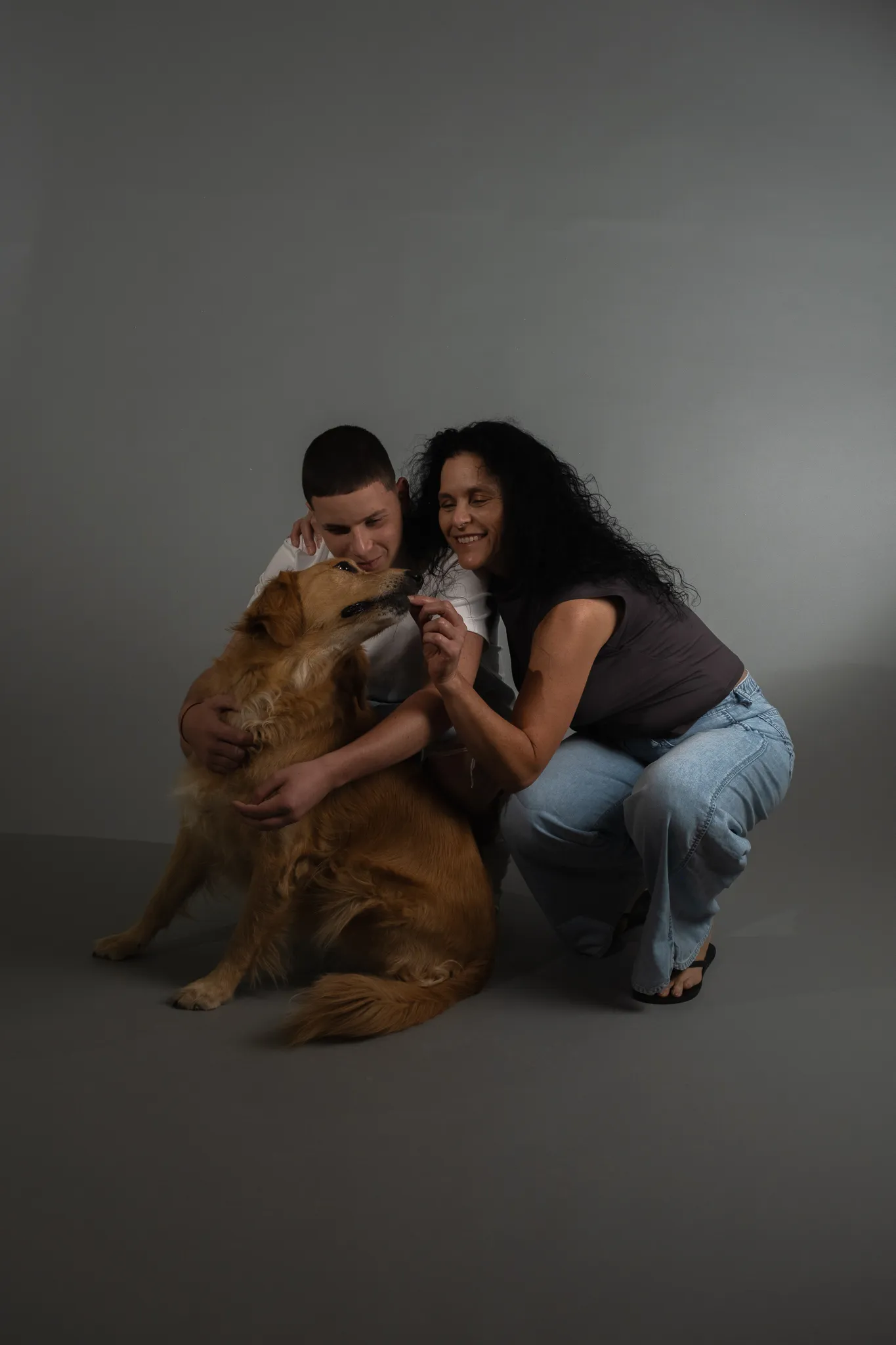
The dog is part of the family, and it deserves to be in the photo. But shooting with a pet adds a whole layer of challenges. Here’s how to turn it into a smooth session instead of chasing a startled dog around.
Timing: tire the dog out first
Iron rule: schedule the session after a long walk or intense playtime. A tired dog is a calm, attentive dog, and far more willing to cooperate than one full of energy who spots a new camera and gets excited about everything.
Familiar treats and objects
Always bring the dog’s favorite treat, plus a familiar toy. I use these to “catch” the dog’s gaze toward the camera at exactly the right moment. A brand-new treat the dog hasn’t had before works great too, it sparks real curiosity right at the moment of the shot.
Who’s in charge of the dog during the shoot?
It’s worth deciding in advance which family member is responsible for the dog and stays out of frame, this prevents chaos. Between poses, that person holds a light leash, and only lets go for the actual shots.
An open location works better
Open space (a park, the beach, a field around Ashdod) works better than an enclosed studio for most dogs: less pressure, more room to move, and fewer startling noises like flashes in a closed space. If you are working in a studio, it’s worth avoiding direct flash and using continuous LED lighting instead, which doesn’t spook them.
Poses that work
- The whole family sitting, dog in the middle: this always works
- A close-up on a petting hand plus the dog’s nose
- A spontaneous moment: running, jumping, licking. The least planned moments usually turn out the best
What if the dog just won’t cooperate?
It happens. The fix: photograph the family first without the dog, then bring it in toward the end of the session once it’s already familiar with the surroundings and the photographer. Flexibility and patience are the key, it doesn’t have to come out perfect on the first try.
Want to document the whole family, furry member included? Let’s set up a session that matches everyone’s pace.